
Newburgh Bike Borrow
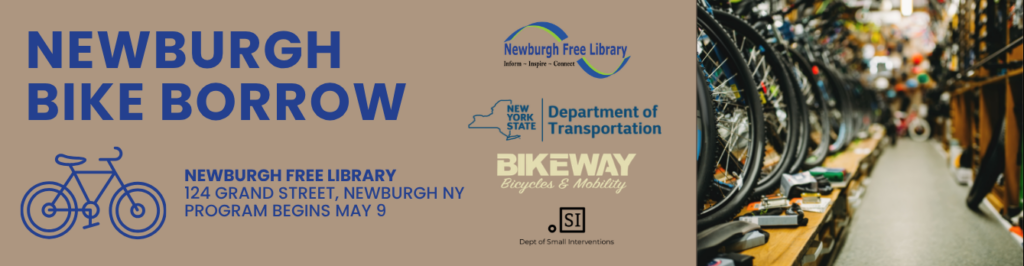
In May 2026, the Newburgh Free Library is launching a Bike Borrow Program, offering residents a free and accessible way to explore our community on two wheels. Through this initiative, library cardholders can borrow a bicycle just like checking out a book, encouraging healthier travel choices, reducing reliance on cars, and strengthening connections to the local community.
The program is part of a broader effort led by the New York State Department of Transportation’s Statewide Mobility Services (SMS) Program to expand access to safe, affordable, and sustainable transportation options across New York State. By bringing bike access directly to a trusted community hub, the program helps address first- and last-mile transportation gaps while supporting local mobility and climate goals.
This program is the first of its kind in the Mid-Hudson Valley and Orange County. The program is made possible through a partnership with the Long Island Bicycle Co-Op, which refurbishes donated bicycles and redistributes them to community-based programs across New York State, helping to expand equitable access to cycling. Our bikes will be maintained by Bikeway Bicycles.
How it works
Any adult (18+) with a Newburgh Free Library card in good standing can borrow a bike from the library. The program will launch with a fleet of three bicycles available on a first-come, first-served basis.
Bikes can be borrowed for day use, with extended borrowing available based on demand. Riders are asked to return bikes within the designated loan period and must sign a waiver and user agreement prior to borrowing.
Bicycle maintenance will be supported through a local partnership to ensure all bikes remain safe and in good working condition.
A growing model for community mobility
Inspired by successful programs at libraries across New York, the Newburgh Bike Borrow Program builds on a proven, low-cost model that expands transportation access through existing community infrastructure. Library-based bike lending programs have demonstrated strong demand and the ability to support short trips that might otherwise be taken by car, helping reduce emissions, improving public health, and making every day travel more accessible.